
EPUB vs PDF: Choosing the Right Format for Today's Readers
Modern publishing is no longer just about creating a digital copy of a printed book. It is about delivering content in a format that fits the habits of today’s audience. Readers want convenience, speed, portability, and comfort. EPUB meets those expectations better than traditional fixed-layout formats.
In today’s digital publishing world, the format of your ebook is almost as important as the content itself. A great manuscript can lose its impact if it is delivered in a format that is difficult to read, poorly displayed on mobile devices, or inconvenient for modern readers. This is where EPUB stands out.
EPUB has become one of the most important formats in digital publishing because it was designed for the way people actually read today: on phones, tablets, e-readers, and desktops. Unlike print-style documents that simply appear on a screen, EPUB is built to adapt. It gives readers a smoother, more flexible, and more accessible reading experience.
What Makes EPUB Important?
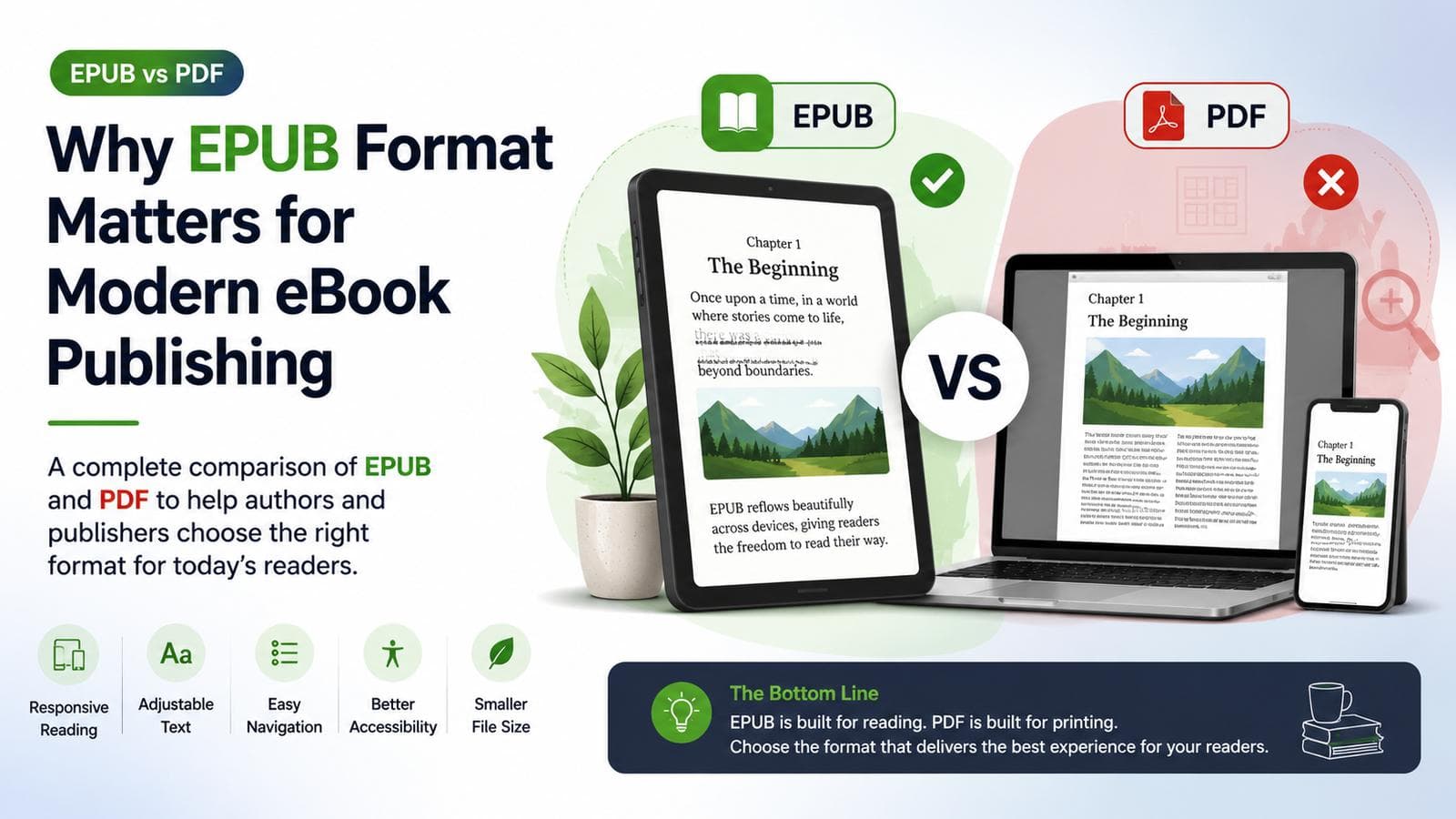
The strength of EPUB lies in its reflowable design. That means the text automatically adjusts to different screen sizes and user settings. A reader can increase font size, switch to dark mode, or open the file on a small smartphone screen, and the content still remains readable and well structured.
This flexibility matters because modern readers consume content across multiple devices. A book that looks perfect on a laptop may feel cramped on a phone if it is locked into a fixed page layout. EPUB solves that problem.
EPUB is also better suited for features that improve accessibility. Readers using screen readers, custom fonts, or other assistive technologies can often interact more easily with EPUB than with static formats. This makes EPUB not only more modern, but also more inclusive.
Another major advantage is that EPUB supports structured navigation. Chapters, sections, tables of contents, links, and metadata can all be organized in a way that makes the reading experience more intuitive. For publishers, that means a cleaner and more professional product. For readers, it means easier navigation and better usability.
EPUB vs PDF
PDF has been a trusted document format for years, and it still has an important place in publishing. But PDF and EPUB serve different purposes.
PDF is a fixed-layout format. What you design is what the reader sees. That makes it ideal for documents where exact layout matters, such as brochures, forms, reports, catalogs, magazines, or print-ready books. If your publication depends heavily on precise positioning of images, columns, or design elements, PDF can be the better choice.
EPUB, however, is built for reading comfort. Instead of preserving a fixed page, it adapts the content to the device and user preferences. That makes it the better choice for novels, nonfiction books, educational material, manuals, and most ebooks intended for digital reading.
Here is the practical difference:
A PDF may look beautiful on a large screen, but on a phone the text often requires zooming and horizontal scrolling. EPUB removes that friction by reshaping the content automatically. That is a major advantage in a mobile-first world.
PDF is also less flexible when it comes to accessibility and personalization. EPUB gives readers more control over how they view the content, which is one reason it is widely preferred for digital-first publishing.
Why Modern Publishers Should Care
Modern publishing is no longer just about creating a digital copy of a printed book. It is about delivering content in a format that fits the habits of today’s audience. Readers want convenience, speed, portability, and comfort. EPUB meets those expectations better than traditional fixed-layout formats.
For authors and publishers, EPUB also opens the door to better distribution. Many ebook platforms, online stores, and reading apps are built around EPUB-compatible workflows. That means publishing in EPUB can increase reach and make your content easier to access across ecosystems.
It also gives publishers more room to build a polished digital experience. With proper formatting, cover design, chapter structure, and metadata, an EPUB book can feel highly professional and ready for modern readers.
When to Use EPUB and When to Use PDF
The best choice depends on the goal of the publication.
Use EPUB when you want:
A flexible reading experience
Compatibility across devices
Better mobile readability
Easier accessibility
A true digital book experience
Use PDF when you want:
Fixed page layout
Print-ready formatting
Precise design control
Documents that must look identical everywhere
In many publishing workflows, both formats are valuable. EPUB works best for reading, while PDF works best for preservation, print, and fixed-layout presentation.
Final Thoughts
EPUB matters because it represents the future of ebook publishing. It is responsive, accessible, reader-friendly, and designed for digital consumption. While PDF still has its place, EPUB offers a more natural experience for modern readers and a more flexible path for publishers who want their content to perform well across devices.
For anyone creating ebooks today, choosing EPUB is not just a technical decision. It is a publishing decision that affects readability, reach, and user experience. In a world where readers expect convenience and mobility, EPUB is the format that truly fits modern publishing.